A beautiful opal can look wrong on the first try, and it is rarely the stone's fault. The chain decides where the opal lands — at the hollow of the throat, on the collarbone, or in the middle of a sweater. Two inches change the whole effect, which is why the gap between a 16-inch and an 18-inch chain is worth understanding before you buy.
Here is what each of the four common lengths does, what it tends to suit, and how to check it against your own neckline.
What Chain Length Actually Measures
Chain length is measured end to end, clasp closed, laid flat. That number is the loop's full circumference, so a 16-inch chain holds the pendant roughly 8 inches below the back of the neck — before you add the pendant itself.
That last part matters. The visible drop is the chain length plus the bail height plus the height of the stone. A tall pear-shaped opal in a long bail can hang a full two inches lower than a small round cabochon on the same chain. Compare finished drops, not just the number on the tag.
Body proportions do the rest. A 20-inch chain on a petite frame often sits where an 18-inch chain sits on a taller person, and a long neck carries a short chain differently than a shorter one does. There is no correct length in the abstract — only the length that puts the opal where you want the eye to go.
16 Inches: Close to the Throat
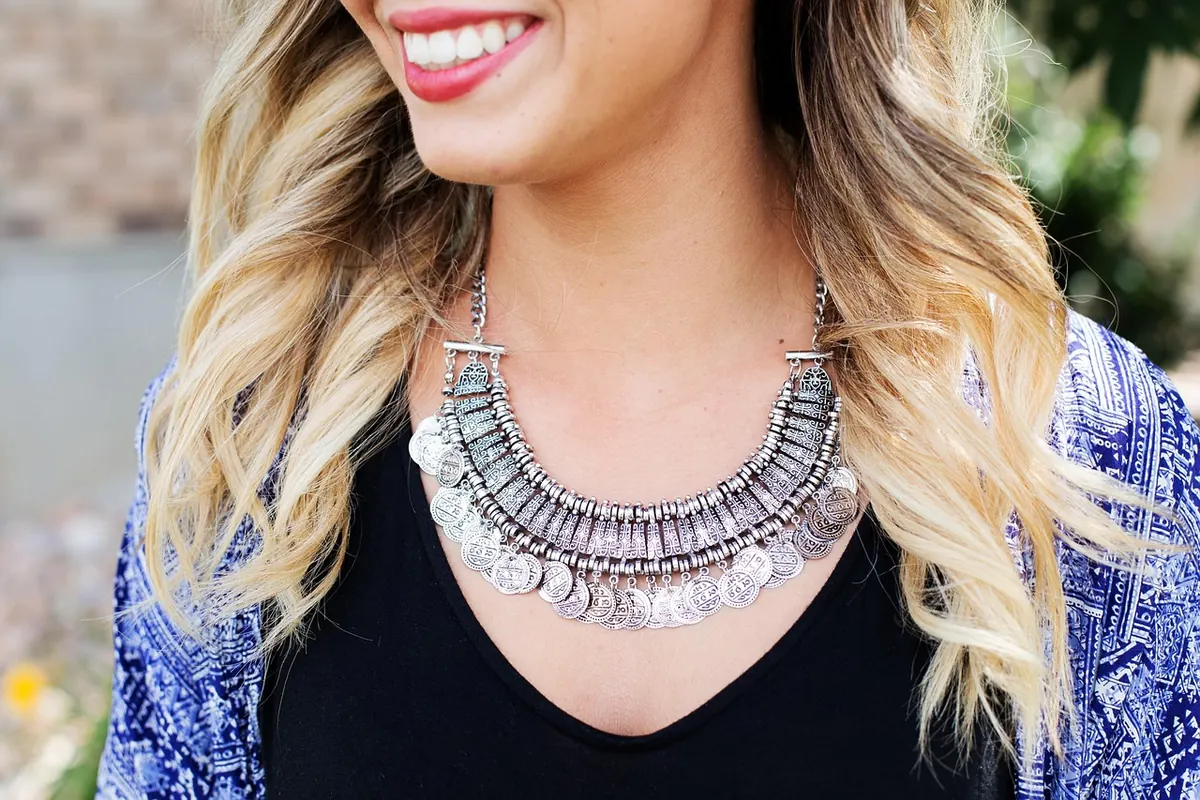
A 16-inch chain sits at the base of the throat, usually just above the collarbone. It reads as deliberate and slightly formal, and it is the length that changes most depending on what you wear with it.
It is at its best with necklines that leave skin bare: scoop necks, V-necks, sweetheart and square necklines, strapless dresses, wide boat necks. On a plain summer top it can look like the only jewelry you need.
It is at its worst under a turtleneck or a high crew neck, where it either disappears beneath the fabric or crowds the collar. If you live in high necklines, this is the one to skip.
Keep the pendant modest here — a small oval, round, or teardrop cabochon in a low bezel setting. A heavy stone on a short chain swings against the collarbone as you move, and that repeated contact is not kind to a soft gem. A large, tall opal also tends to crowd the face at this height instead of sitting below it.
18 Inches: The Collarbone Classic
Eighteen inches is the most common pendant length for good reason: it lands on or just below the collarbone on most adults, which is the small patch of skin nearly every neckline frames.
It works with a crew neck, a V-neck, a scoop, and an open shirt collar. It sits comfortably under a scarf in winter and above a boat neck in summer. If you are buying a first chain for yourself or for someone whose wardrobe you do not know well, this is the safest option on the list.
It is also the most forgiving length for pendant size. A medium opal — roughly the width of a thumbnail — has room to breathe at 18 inches without looking stranded. Very large stones work too, though they will dominate the collarbone rather than hang quietly.
One caveat: on a broad chest or a long neck, 18 inches can feel shorter than expected, almost like a collar. If you want the pendant to clear the collarbone clearly, go up to 20.
20 Inches: A Quiet Drop
Twenty inches drops a couple of inches below the collarbone, onto the upper chest. It is the length that works best over clothing rather than against skin, which makes it the natural partner for fine-knit sweaters, turtlenecks, and a shirt buttoned most of the way up.
It also gives larger stones somewhere to go. A statement opal — a broad freeform cabochon, a cluster, or a drop with a long bail — hangs better at 20 inches than at 16, where it would sit too close to the jaw. The extra chain adds a vertical line, which many people find flattering.
Two things to check. A pendant at this height can slip inside a wide V-neck and disappear against skin, so try it with the neckline you actually wear. And a longer chain gives more leverage if the pendant catches on something, so match the chain to the stone: a fine cable is not the right home for a heavy opal. A slightly sturdier cable, box, or rope chain is.
24 Inches: The Long Line
At 24 inches the pendant sits mid-chest, at or just above the bust line on many people and lower on shorter torsos. It is a layering length first and a solo length second.
It needs a pendant with presence. A small round cabochon on a 24-inch chain looks lost; a wide opal, a bar-set drop, or a cluster holds its own. Wear it under a short chain at 16 or 18 inches and the long one becomes the base of the composition.
Movement is the other consideration. At this length the pendant swings when you walk, which means more contact with desk edges, seatbelt straps, and bag straps. Opals are softer than most gemstones and dislike knocks, so save the 24-inch piece for days when you are not leaning over a workbench.
Matching Length to Neckline and Layers
If you are buying for a particular piece of clothing, work backwards from the neckline.
- Turtleneck or high crew: 20 or 24 inches, worn over the fabric.
- Standard crew: 18 inches, sitting in the open space below the collar.
- V-neck and scoop: 16 or 18 inches, so the pendant sits inside the V rather than crossing it.
- Button-down shirt: 18 inches with a button or two open, 20 for a fully buttoned look.
- Strapless, halter, or wide boat neck: 16 inches, kept small and simple.
- Square and sweetheart: 16 or 18, depending on how deep the neckline runs.
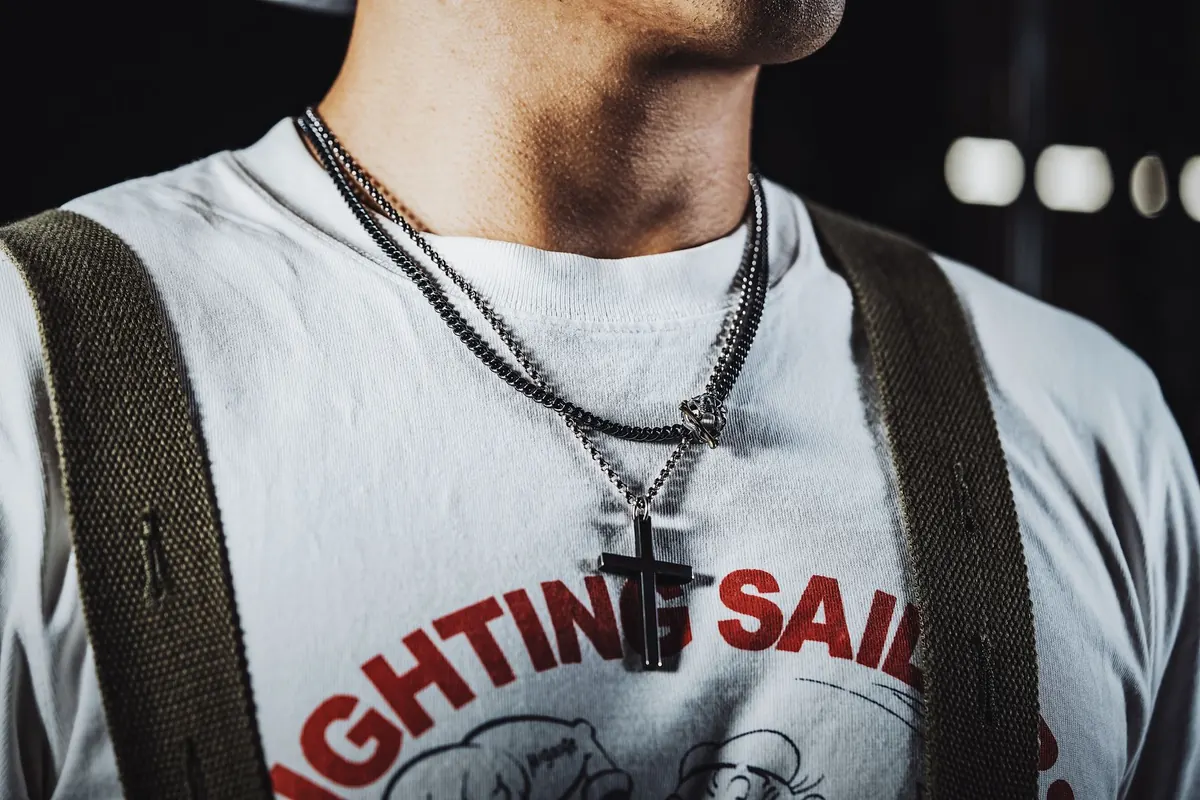
For layering, two inches of separation is the reliable rule. A 16 and an 18, or an 18 and a 20, read as intentional; a 16 and a 17 just look like a mistake. Wider gaps — 16 with 20, or 18 with 24 — give each pendant its own space, which suits opals in different colors or shapes. Keep one piece as the focal point, let the others stay quiet, and put the largest stone lowest so the composition does not look top-heavy.
Chain style matters too. A box chain stays straight and holds a pendant centered; a cable or rope chain drapes more softly and is more forgiving of an off-center bail. If you are between lengths, a two-inch extender costs less than a second chain and lets you test both.
A Practical Way to Choose
Before ordering, do this at home with a piece of string.
- Put on the top or dress you wear most often.
- Tie the string around your neck and mark 16, 18, 20, and 24 inches with a pen or tape.
- Cut a paper shape to the size of the opal you are considering, punch a hole, and hang it from each mark.
- Look in a mirror standing up, then sit down and look again — pendants ride differently when you are seated.
- Note which mark lands where you want the eye to go, then order that length.
Two last checks. If the pendant is heavy, ask for a chain rated for it or choose a sturdier link. And whatever length you settle on, store the opal apart from harder stones, keep perfume and hairspray off it, and take it off before bed — a soft gem on a swinging chain does best with a little care.
The right length is the one that puts the opal where you keep looking. Start at 18 inches if you are unsure, move to 16 for bare necklines, 20 for knitwear, and 24 when you want a long line to layer against. Once you know your number, choosing opal pendants gets considerably simpler.
Photo: COPPERTIST WU / Pexels